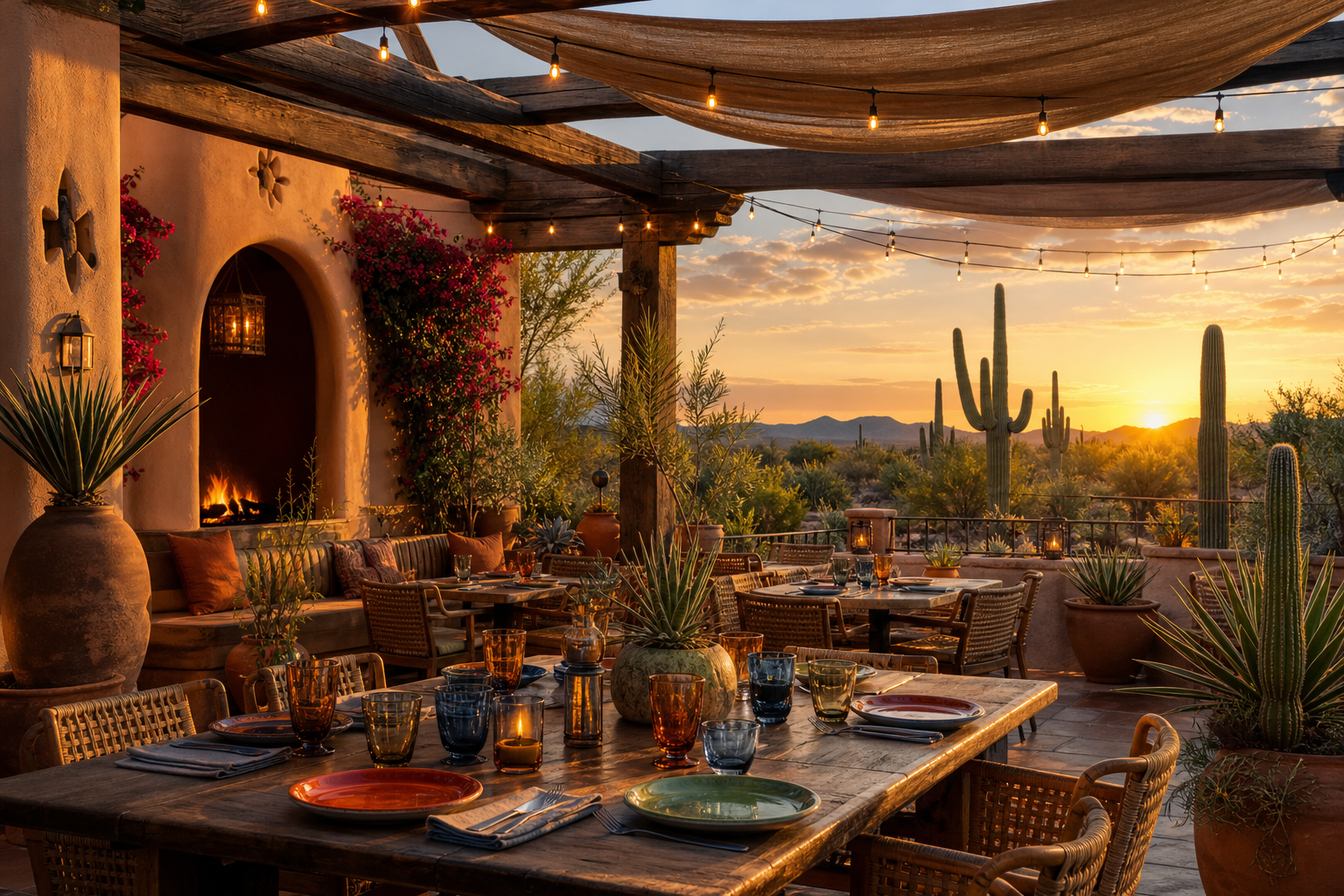
In Scottsdale, where you eat matters almost as much as what you eat - the neighborhood tells you more about the experience than the menu ever will.
Find your next Scottsdale table the local way
Browse the Local Eyes Scottsdale restaurant listings to find the spots your neighborhood is talking about right now.
Scottsdale is not one dining scene, it is four
Most visitors make the mistake of treating Scottsdale as a single destination. It is not. The city stretches 31 miles from north to south, covering 184.5 square miles, and the restaurant culture shifts noticeably as you move through it. The city breaks into four recognizable zones: South Scottsdale, Old Town (the downtown core), Central Scottsdale along the Shea Corridor, and North Scottsdale. Each has a different price point, a different pace, and a different relationship to tourists. Old Town is where the density is highest, with more than 90 restaurants packed into a walkable grid of arts districts, historic blocks, and waterfront patios. North Scottsdale, by contrast, is resort-suburban: bigger spaces, golf-club dining rooms, and chef-driven restaurants near communities like DC Ranch and Grayhawk. Knowing which zone fits your mood before you leave the hotel saves a lot of driving.
The flavors that define how Scottsdale eats
Scottsdale's food identity sits at the intersection of Sonoran and Southwestern cooking, steakhouse tradition, and a growing wave of chef-led modern American kitchens. Sonoran influence means dishes built around mesquite, chiles, and citrus, flavors that feel native to the desert rather than imported. The steakhouse culture is deeply rooted, and several of the city's most celebrated restaurants have been serving prime cuts for decades. Beyond those anchors, many kitchens now emphasize locally sourced ingredients and seasonal menus that reflect Arizona's agricultural output. Mexican-influenced cooking appears across every price point, from neighborhood taquerias to upscale plating. What you will not find much of is the kind of generic chain-heavy dining that fills suburban corridors in other Sun Belt cities. Even casual spots tend to have a point of view. If you want a shortcut to understanding the local palate, look for menus that name their Arizona ranchers and farms - that signals a kitchen taking the region seriously. For a sense of how other cities build a local food identity around a distinct geography, the West Loop restaurant guide offers a useful parallel.
Patio season shapes when and where locals go out
Outdoor dining is not an amenity in Scottsdale - it is a primary consideration. The cooler months from roughly November through April are when patio culture peaks: festivals, long weekend brunches, and evening dinners that stretch past sunset without discomfort. In summer, the calculus flips. Temperatures push locals toward indoor dining, early-morning coffee spots, and late-evening happy hours once the heat breaks. Restaurants that invest in shade structures, misting systems, and water features earn loyal regulars because they extend the usable patio season. When choosing a restaurant for a group, asking about patio availability and whether it is covered is a genuinely practical question, not a trivial one. The Old Town waterfront and 5th Avenue areas have some of the most appealing outdoor setups in the city, with mature trees and proximity to pedestrian foot traffic that makes an evening feel alive.
How locals actually navigate the restaurant landscape
Scottsdale residents tend to anchor their dining habits to their own neighborhood first, then venture into Old Town for special occasions or out-of-town guests. Brunch is a serious weekly ritual, and spots with inventive menus and a lively atmosphere, like Hash Kitchen's build-your-own Bloody Mary bar and dishes like cannoli pancakes and short rib hash, develop devoted followings quickly. Happy hour is another organizing principle: many locals plan their week around which patios are offering the best late-afternoon scene. For everyday dining, the preference runs toward spots that feel like a genuine part of the neighborhood rather than a production aimed at visitors. Reservations matter more than many newcomers expect, particularly on weekends and during the peak season from November through April, when the city fills with seasonal residents and visitors. If you are new to town and building your own mental map, browsing a platform like Local Eyes that organizes restaurants by neighborhood and lets residents leave honest recommendations is a practical starting point. Guides like the Santa Barbara local restaurant guide and the Sioux Falls dining guide show how much neighborhood context shapes the experience in cities of similar scale.
Four ways to find your table in Scottsdale
A couple planning a date-night patio dinner
The priority here is atmosphere as much as food. Old Town's waterfront and 5th Avenue corridor offer the most walkable concentration of restaurants with serious outdoor spaces, which means you can browse a few menus in person before committing. Look for spots that have invested in shade and water features, since those signal year-round patio viability. Booking a reservation at least a few days ahead during peak season (November through April) is strongly advised, as the best patio tables at well-reviewed restaurants fill up quickly. Arriving slightly before sunset gives you the best of both the view and the temperature.
A visitor wanting an authentic Southwestern brunch
Brunch in Scottsdale is not a quiet affair. The local culture around weekend morning dining is lively and social, with restaurants like Hash Kitchen building a following around inventive dishes and interactive elements like a build-your-own Bloody Mary bar. For the most authentic Southwestern flavor, look for menus that incorporate regional ingredients: chiles, citrus, local eggs, and tortilla-based dishes that reflect Sonoran influence rather than generic American breakfast fare. Old Town is the most convenient base for a brunch crawl on foot, with multiple options within a short walk of each other.
A family looking for a casual neighborhood spot
Families navigating Scottsdale's dining scene do best by anchoring to the neighborhood they are staying in rather than defaulting to Old Town, which skews toward nightlife and upscale dining after dark. Central Scottsdale along the Shea Corridor has a more residential character, with casual restaurants that serve the local population rather than a tourist audience. Patio seating is a practical plus for families with younger children, since the open-air environment is more forgiving. Checking a community platform like Local Eyes for resident-reviewed spots in a specific zip code tends to surface options that guidebooks miss.
A food-focused traveler chasing chef-driven kitchens
North Scottsdale is the destination for this kind of dining. The area near DC Ranch, Grayhawk, and Troon North has developed a cluster of higher-end, chef-driven restaurants that draw serious diners from across the metro. These kitchens tend to emphasize seasonal menus, locally sourced proteins, and a more composed style of cooking than the casual Southwestern spots that dominate Old Town. The city's broader food culture has gained recognition as one of Arizona's premier dining destinations, and the most ambitious cooking is happening in these northern neighborhoods. Reservations are essentially required, and many restaurants in this tier are worth planning a trip around rather than treating as an afterthought.
Scottsdale restaurant guide: questions locals get asked most
Browse Scottsdale restaurants by neighborhood on Local Eyes
Local Eyes organizes Scottsdale restaurants by neighborhood, so you can browse by zone, read what residents are actually saying, and build a dining itinerary that fits where you are staying and what you are in the mood for. Whether you are planning a patio dinner in Old Town or hunting down a chef-driven kitchen in North Scottsdale, the listings give you a local starting point rather than a generic top-ten.